Quality Assurance (QA) and Quality Control (QC) in Manufacturing: Differences You Need to Know
To build reliable, repeatable quality, manufacturers need both quality assurance (QA) and quality control (QC) working together. They’re related, but not the same—and when teams confuse the two, even the best “quality program” can fall flat.
Understanding how QA and QC differ (and how they connect) helps everyone, from leadership to the shop floor, play the right role in delivering parts on time, on budget, and to spec.
What Is Quality Control (QC)?
Quality Control (QC) focuses on finding defects in parts and products.
QC verifies that what was produced matches the design requirements and that finished parts meet documented quality standards. It is:
-
Product-focused – checks parts, assemblies, and final output
-
Verification-driven – uses inspections, tests, and measurements
-
Reactive – catches issues after the part is made
In short, QC answers the question: “Does this part meet the specification?”
What Is Quality Assurance (QA)?
Quality Assurance (QA) focuses on preventing defects by designing better processes.
QA ensures that methods, procedures, and controls are defined, followed, and continuously improved. It is:
-
Process-focused – defines how work should be done
-
Standards-based – relies on procedures, work instructions, and audits
-
Proactive – looks for weaknesses before they cause nonconformances
QA answers the question: “Are our processes capable of producing good parts every time?”
QA vs. QC: How They Work Together
To improve quality and reduce corrective actions, it’s not “QA or QC”, you need both:
-
QC finds issues in the product.
-
QA uses that information to adjust processes so the same issues don’t come back.
When QC discovers a nonconformance, a strong QA program will trigger root-cause analysis, corrective and preventive actions, and updates to procedures, training, or tooling.
1. People: Dedicated QC Team vs. Organization-Wide QA
-
QC is typically handled by a dedicated inspection or test team responsible for finding defects.
-
QA involves everyone: engineering, production, quality, and leadership all contribute to defining processes, training teams, and enforcing standards.
QA activities include documenting processes, selecting tools, running audits, and driving continuous improvement across the organization.
2. Focus: Process-Oriented QA vs. Product-Oriented QC
-
QA is process-oriented – it defines and improves the steps required to make good parts.
-
QC is product-oriented – it inspects and verifies that parts meet specifications before they reach the customer.
Think of it as actions vs. results:
QA shapes the actions; QC confirms the results.
3. Timing: Proactive QA vs. Reactive QC
-
QA is proactive – it aims to prevent problems from appearing in the first place.
-
QC is reactive – it identifies problems after the part is produced.
When QC uncovers an issue, it should feed back into QA, triggering:
-
Investigation and root-cause analysis
-
Corrective and preventive actions (CAPA)
-
Updates to processes, documentation, or training
This closed loop keeps the same problem from recurring.
4. Activities: Process Design vs. Verification
Quality Assurance activities include:
-
Defining and standardizing procedures
-
Establishing work instructions and checklists
-
Training employees on methods and tools
-
Performing internal audits and process reviews
Quality Control activities include:
-
Inspecting parts and assemblies
-
Measuring dimensions and validating results
-
Performing functional and performance tests
-
Documenting findings and dispositioning nonconformances
Both are essential parts of a mature quality management system.
The Benefits of Strong Quality Assurance
When manufacturers invest in robust QA, as more than just “documentation”, they see measurable benefits.
Increased Cost Savings
Preventing defects is cheaper than fixing them. Strong QA reduces:
-
Scrap and rework
-
Returns, rejections, and recalls
-
Unplanned downtime and firefighting
Higher Production Efficiency
With fewer quality issues, resources can be focused on throughput and innovation rather than rework and troubleshooting.
Greater Customer Satisfaction
Customers receive more consistent parts, fewer surprises, and faster deliveries. That builds trust, supports repeat business, and opens the door to higher-value work.
Using High QA to Connect QA & QC
Maintaining quality is an ongoing challenge, especially when QA and QC live in separate spreadsheets, systems, and paper binders.
High QA provides an integrated quality platform that serves as a single source of truth for both QA and QC:
-
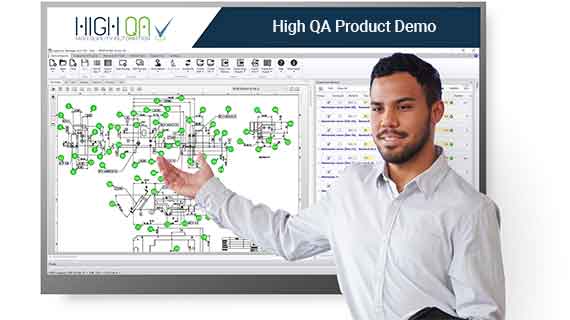
Automatically balloon drawings and extract characteristics
-
Build and manage inspection plans tied to the latest revision
-
Collect and analyze inspection data from the shop floor
-
Generate FAI, PPAP, and full submission packages in minutes instead of hours
By connecting QA processes and QC data in one system, teams can:
-
See issues sooner and act faster
-
Standardize how quality is planned, executed, and reported
-
Close the loop between nonconformances, root cause, and process improvement
About High QA
High QA delivers an integrated manufacturing quality platform that unifies ballooning, inspection planning, data collection, and FAI/APQP/PPAP reporting in a single digital thread.
Manufacturers in aerospace, automotive, medical device, defense, and precision machining use High QA to:
-
Reduce quality-related work by up to 75%
-
Eliminate manual data entry and disconnected spreadsheets
-
Keep engineering, quality, and metrology aligned to the latest revision
-
Improve traceability, compliance, and throughput across their supply chain
Explore our website to see how High QA can streamline both QA and QC for your organization, or request a personalized demo to see the platform in action.